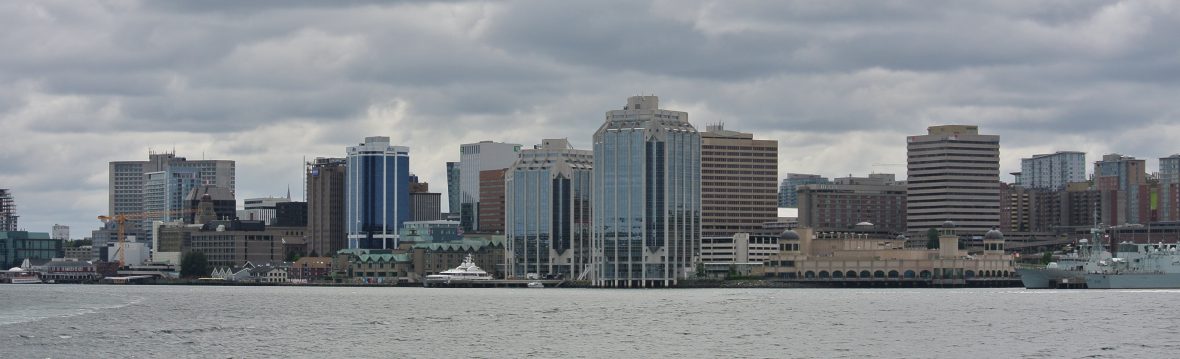
Nova Scotia is a province in the country of Canada, which means the official currency is the Canadian dollar ($). One hundred cents makes up one dollar.
Canadian money consists of both coins and paper bills.
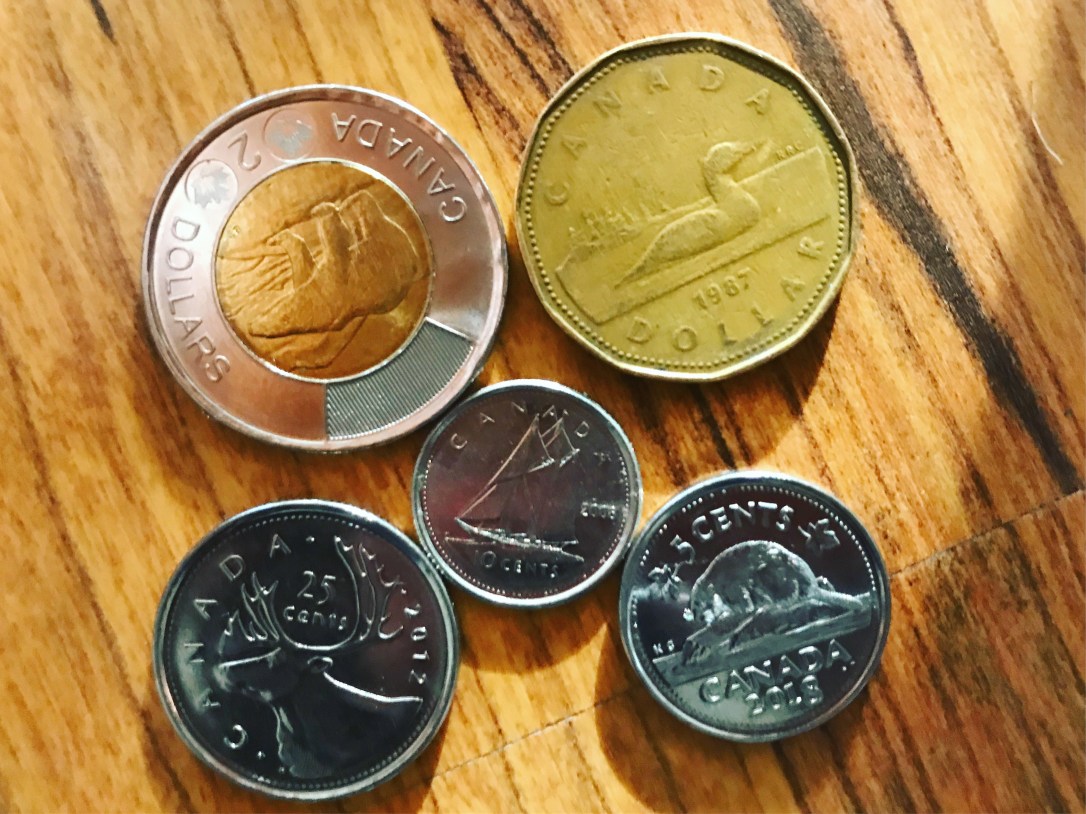
The coins come in different shapes, colours and sizes. The nickel is a five cent coin, the dime is ten cents and a quarter is worth 25 cents. Additionally there are the one and two dollar coins with the funny nicknames that non-Canadians like to tease us about. The loonie is worth a dollar and the toonie is worth two dollars.
Canadian bills have often been jokingly compared to Monopoly money because each denomination comes in a different colour. There is a $5 bill (blue), a $10 bill (purple), a $20 bill (green), a $50 bill (red) and a $100 bill (brown).
If you didn’t get a chance to get Canadian money before you left home, you can exchange money once you get here. There is a currency exchange kiosk at the Halifax Stanfield International Airport, as well as at the Halifax Shopping Centre. You can also use your debit card at a bank machine (ATM) to withdraw Canadian Currency. (Note: In some tourist areas they will accept American money, but be warned, they will only take it at par.)
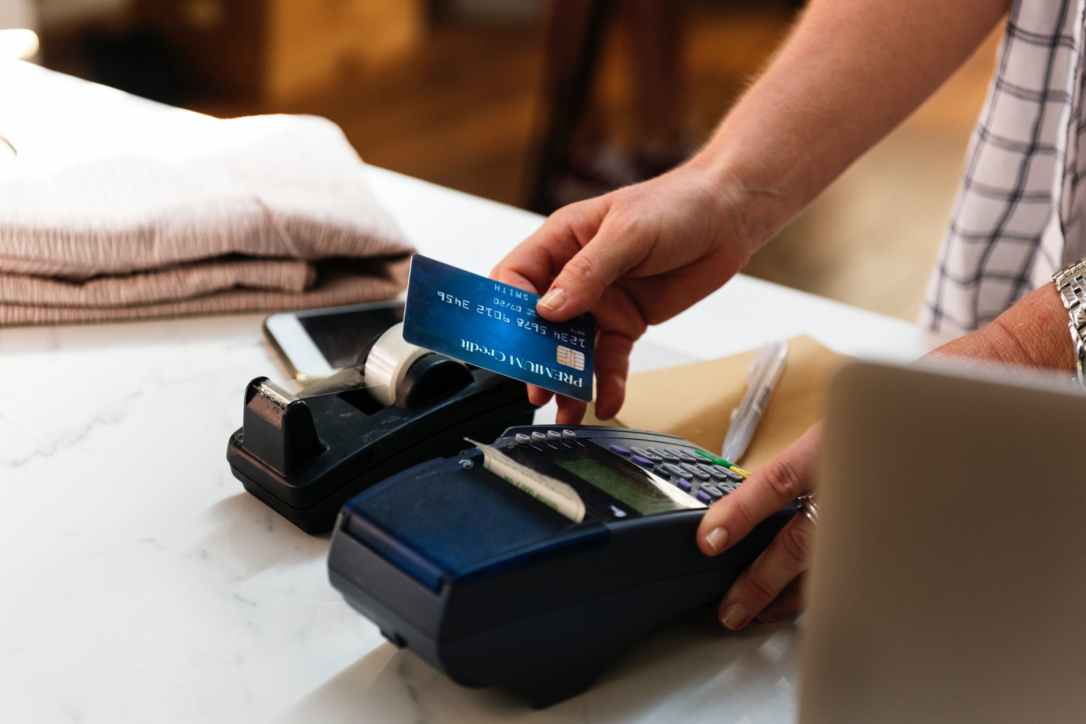
If you prefer to pay with a card over cash, that won’t be a problem. Debit and credit are widely accepted methods of payment.
Tipping is a common practice in Nova Scotia. If you sit down to eat at a restaurant it is custom to tip 15 per cent of your bill. Customers are also expected to tip bartenders (about 50 cents or a dollar per drink), taxi drivers (15 per cent of the cost of the ride), hotel bellhop (a couple of dollars if they help you with your luggage), or tour guides (give based upon how well you think the guide did/ the duration of the tour).
 The Gleeful Globetrotter